Treating ADHD
A Natural Solution to ADHD Treatment without Meds
Neuroscience proves your child’s brain can rewire itself and overcome ADHD symptoms without medication.
Join 50,000 parents who learned how to help stimulate their child’s brain at home.
See our success stories below and learn how you can help your child.
Our Program is Overseen by a Medical Staff Under the Guidance of Chief Medical Officer Denise Malkowicz, MD
Neuroscience Proves ADHD Brains Have the Potential to Get Better
- Attention Deficit Disorder (ADD) is Not a Disease. Doctors use this term to label a set of symptoms.
- The ADHD Brain is Wired Differently: Sciences shows that wiring can be changed.
- Real Results: Over 50,000 parents have used our home-based program of physical and mental activities to help their child improve.
- Symptoms Can Disappear: Children with an ADD or ADHD diagnosis have improved their abilities to organize, prioritize, plan, focus, and remember instructions.
We Teach You How to Stimulate Your Child's ADHD Brain & Help It Rewire
Our courses are based on seven decades of research in child brain development. These courses provide a carefully designed plan to enhance and enrich your child’s abilities at home.

In-Depth Teaching
Guided by our medical team with extensive experience in child brain development, we teach parents how to actively facilitate their child's neurological development.

Appointments & Support
You will start the program by attending a live online course. Then you will have an initial appointment and begin receiving support.
Digital Resources
Our online course, books and materials allow you to start immediately to put your child on a pathway to wellness.
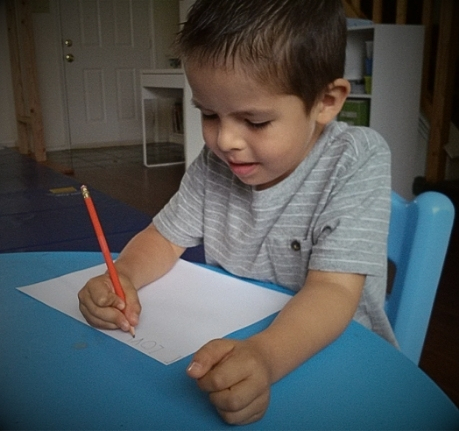
Treating ADHD Without Meds: A Home-Based Program
Our approach to treating ADHD is stimulating the brain. We teach parents a home-based program of physical and mental activities to rewire their child’s brain.
The results of the program defy what doctors may have told parents.
Brain stimulation works. Parents are the ones “treating” their children. More than 50,000 parents have witnessed their child’s recovery.
If you Are Here, Chances Are You Are Tired
- Tired of daily battles.
- Tired of second-guessing yourself.
- Tired of feeling like no matter how hard you try, it is never quite enough.
Treating ADHD can feel overwhelming, especially when every solution seems to revolve around managing symptoms instead of helping your child’s brain develop differently.
You are not alone in this. And you are not failing.
A Parent’s Reflection
If I could do anything over again and differently, I would have started the program early on so that my family would not have suffered this long.
- Mother from Dallas, Texas
This mother’s words reflect what many parents feel when they finally find direction and support. They wish they had found guidance sooner.
When Parenting Feels Like a Constant Weight
Many parents quietly share the same struggles:
- You’re frustrated by behaviors that seem out of your control, then feel guilty about it.
- You know what you’re supposed to do, but strategies never seem to stick, which leaves you feeling like a failure.
- The ongoing stress has started to affect your own anxiety, mood, or sense of well-being.
- You feel misunderstood by schools, family, or friends who don’t understand these challenges.
You may have asked yourself, “Can ADHD be cured?”
The parents in our program know the answer. They will tell you that their child’s symptoms disappeared.
Is This Program the Right Fit for Your Family?
This approach may resonate with you if:
- You are looking for a natural ADHD treatment option without meds.
- You want to understand treat the underlying problem, not just the symptoms.
- You want guidance that respects your child and your role as a parent.
It may not be right for every family, and that’s okay.
You Do Not Have to Figure This Out Alone
If you are feeling overwhelmed, uncertain, or simply worn down, that does not mean you are doing something wrong. Many parents reach this point after trying their best for a long time.
Take this opportunity:
- Ask your questions.
- Explore your options.
- Seek understanding before making any decisions.
Get to Know Our Kids
Meet the kids who are getting better every day.
Marilyn’s Daughter
After seeing The Institutes children perform The Mikado eighteen years ago, I went home overwhelmed at what I had seen, but determined to bring creativity and intellectual pursuits into our daily life.
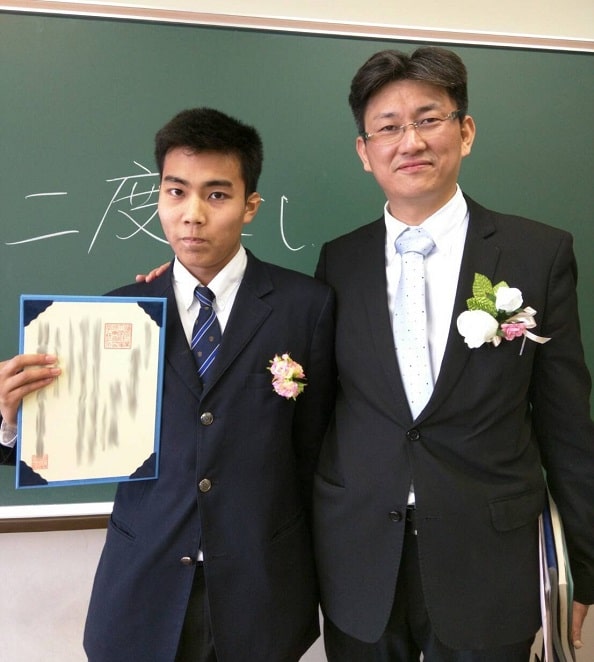
Yuya – Age 18
It is hard not to be impressed by Yuya’s determination and persistence. While other little boys enjoyed their childhoods, he was often alone and isolated by his sensory problems, or ill and confined by his allergies. Those times are a distant memory now.
Sean – Age 16
Sean was diagnosed as autistic and as having a “non-verbal learning disorder.” When Sean was 11 years old, his parents first learned about the work of The Institutes.
Caleb- Age
When Caleb’s parents were told that their son had Cerebral Palsy, doctors told them that his prognosis was bleak. His parents refused to accept that Caleb could not improve and made plans to attend the What To Do About Your Brain- Injured Child course.
Jaden – Age 5
“With guidance from The Institutes, and supportive friends and family, plus his own hard work and cooperation, we are overjoyed with Jaden’s progression.”
Alex – Age 3
Alex was diagnosed as autistic at 18 months of age. When he was 2 years and 9 months of age, his mother attended the What To Do About Your Brain-Injured Child course.
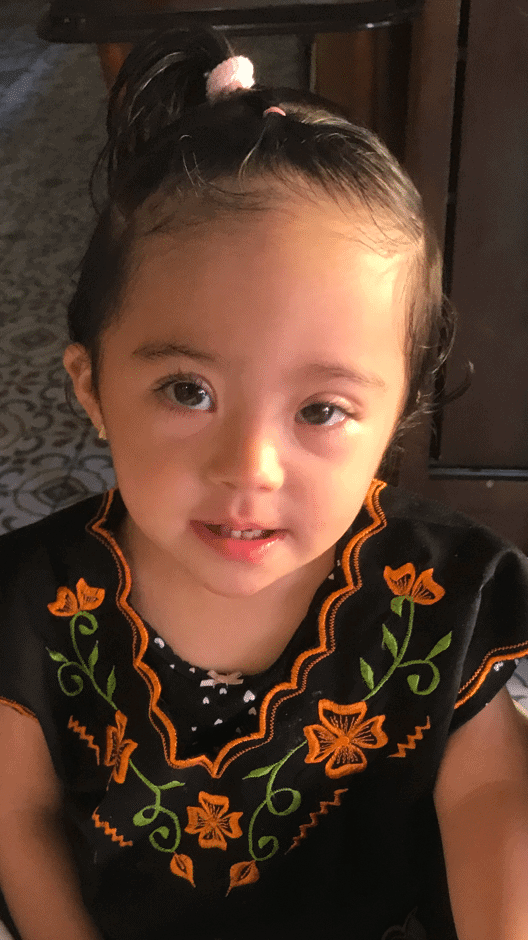
Ana Sofia – Age 2
Ana Sofia’s mother realized her daughter had slightly flattened facial features and poor muscle tone. Her doctor told her that Ana Sofia had Trisomy 21. But with the help of The Institutes, Ana Sofia crawled, crept, walked, laughed, and read before she was 2 years.
Blanca – Age 6
An MRI done on Blanca’s first day of life showed a massive brain edema. She was kept in the hospital for 12 days. Blanca returned home but had no significant development.
The “What to Do About Your Brain-Injured Child” course put her on the track to wellness.
Floyd – Age 6
At about 4 months, Floyd started showing symptoms of Trisomy 21. His parents worried he would not recover. That is when they discovered The Institutes and began implementing a treatment program at home when Floyd was 6 months old. The rest is history.

Donate