Autism Treatment & Success Stories

Most treatments focus on symptom management. But neuroscience proves you can do more.

Join 50,000 parents who learned how to provide stimulation and opportunity to enhance and enrich brain growth and development.

See our success stories below and learn how you can help your child.

Matilde

Our Program is Guided by Chief Medical Officer Denise Malkowicz, MD and a Medical Team with Extensive Experience in Child-Brain Development.

Neuroscience Proves Children Diagnosed with Autism Have the Potential to Get Better

Sean – Age 16
  • Autism Spectrum Disorder (ASD) is Not a Disease. It is a label to describe a variety of symptoms.
  • Real Results: Over 50,000 parents have used our home-based program of physical opportunity and intellectual challenges to help their child’s brain develop and grow.
  • Symptoms Can Disappear: Children with an Asperger’s or ASD diagnosis have gained speech, social skills, and confidence.

Discover How Much More Your Child Is Capable of Achieving

You can help your child develop their cognitive, physical, and social abilities at home. 

  • No one knows your child better than you do as mother and father. This makes you the best teachers.
  • Your home provides the perfect environment for you to help your child.
  • We empower you with the expertise to lead your child’s development.
  • The results our families achieve defy traditional medical predictions.
  • The success stories below are not only testimonials, they are proof of real results when parents have the right tools and support.
Dylan Autism success story

"Within a year of home treatment, Alex is talking in full sentences, running, riding his tricycle, reading commercial books, expressing feelings, can count up to 100, knows all the states of the United States, and I can go on and on…my dreams for my son are truly back.”

Program Components

Functional Neurological Evaluation

A complete developmental profile of your child showing the neurological age and rate of growth.

Brain
Function

Understand and identify the areas of the brain that may be disorganized.

Sensory
Program

A comprehensive sensory stimulation program to address visual, auditory and tactile problems such as neurological or cortical blindness, deafness and lack of sensation as well as milder sensory issues.

Physical Program

A neurological program that uses all aspects of the child’s physical abilities to promote brain growth.

Intellectual Program

An intellectual program that embraces reading and general knowledge with the goal for each child to catch up and surpass the average child.

Lecture Notebook & Take‑Home Tools

Materials to guide at-home progress for 6–12 months.

Physiological
Program

An overview of factors that affect children’s health: Food, water, air, and medications. The importance of oxygen enrichment to the brain.

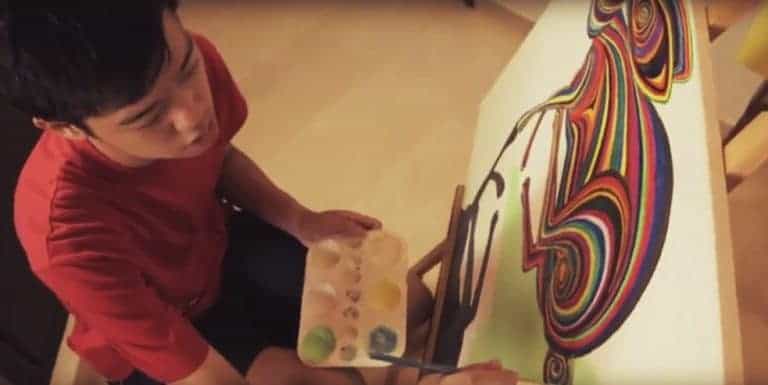
autistic-or-artistic

The Institutes is a nonprofit organization

We have survived because we have a program that really works, we work very hard, and because people of goodwill around the world have contributed to our work.

We could not exist without this help. If you want to help give hurt children a fighting chance to be well, and well kids the chance to be highly capable and confident, then join our gentle revolution and contribute.

Autism Success Stories

Our parents know firsthand that children diagnosed with autism spectrum disorder have amazing potential. Meet the kids who are getting better every day.

Malcolm – Age 3

Malcolm – Age 3

Autism, Developmental Delay
Malcolm – Age 3
Autism, Developmental Delay

“We have been doing the program now for 9 months, and he is a completely different boy. When he started the program, he said only three words. He now has 300-400 words, and more words are coming.“

Mateo – Age 4

Mateo – Age 4

Autism, Language Development, Learning Problems
Mateo – Age 4
Autism, Language Development, Learning Problems

“As a family, it is our desire and life project to develop our children´s neurological and physical capabilities to their full potential. We have found at The Institutes, the method, the direction, the support and the experience of the staff to overcome our son's brain injury”
Jonathan – Age 7

Jonathan – Age 7

Autism
Jonathan – Age 7
Autism

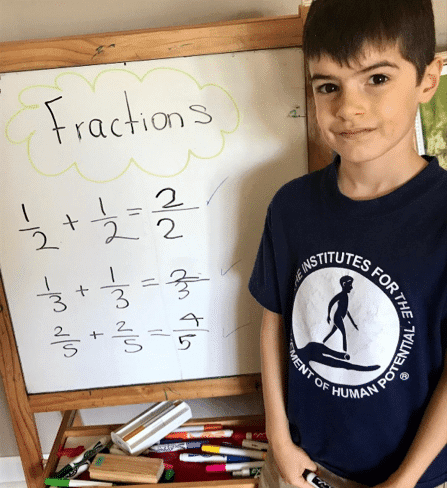
After a good start as a baby, little Jonathon’s development is seriously derailed. Can he find the help he needs to get back on track? Mother tells his story.

Sean – Age 16

Sean – Age 16

Autism
Sean – Age 16
Autism

Sean was diagnosed as autistic and as having a “non-verbal learning disorder.” When Sean was 11 years old, his parents first learned about the work of The Institutes.

Siao – Age 23 autism success story

Siao – Age 23

Autism
Siao – Age 23
Autism

By three years of age, Siao had been diagnosed as autistic, his lack of speech persisted and he was socially withdrawn. Today, Siao, age 23, reads at the university level, and is a long distance runner.
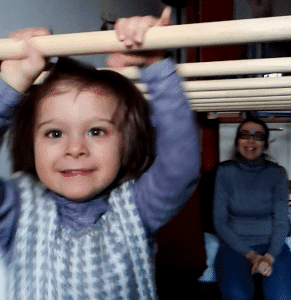
Matilde – Age 5 autism Success Story

Matilde – Age 5

Autism, Epilepsy
Matilde – Age 5
Autism, Epilepsy

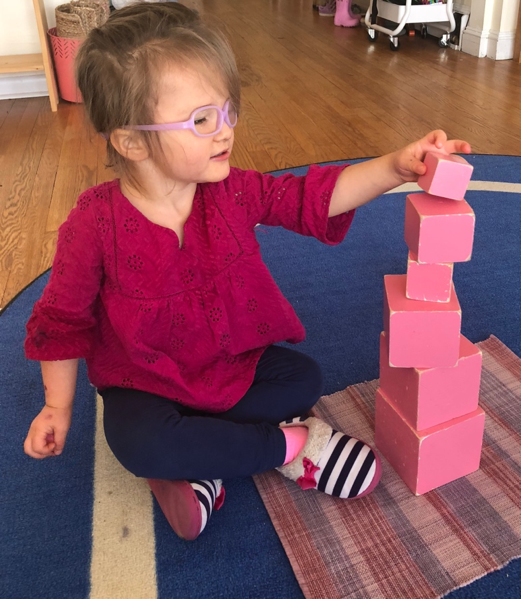
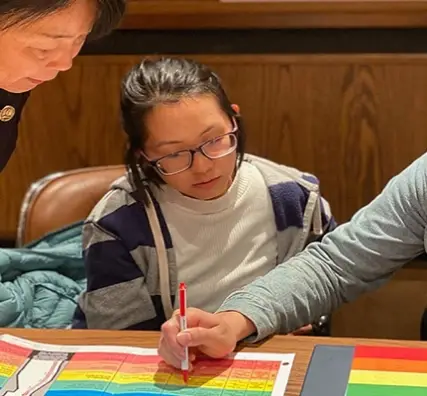
For her first month, Matilde had breathing and feeding problems that concerned her parents. Parents were told Matilde would never be well...but they refused to give up.
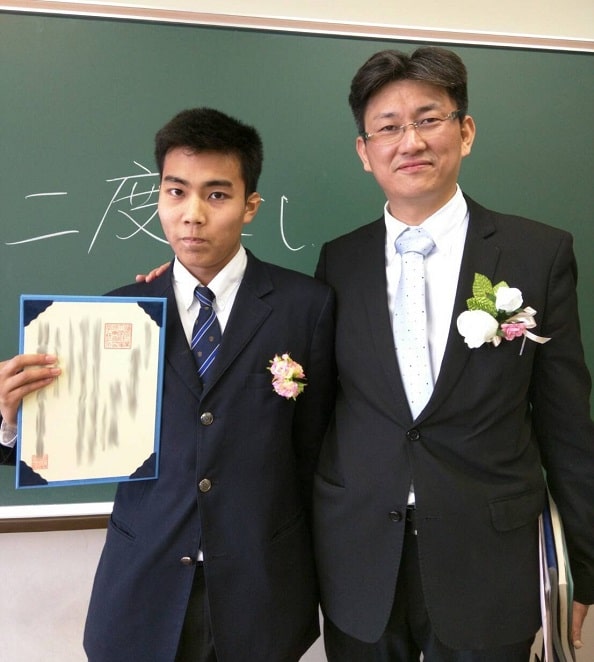
Yuya – Age 18

Yuya – Age 18

Autism, Convergence
Yuya – Age 18
Autism, Convergence

It is hard not to be impressed by Yuya’s determination and persistence. While other little boys enjoyed their childhoods, he was often alone and isolated by his sensory problems, or ill and confined by his allergies. Those times are a distant memory now.

Siao – Age 23

Siao – Age 23

Autism
Siao – Age 23
Autism

At 18 months, Siao was diagnosed as autistic. But at age 3, Siao’s parents attended the “What to Do About Your Brain Injured Child” course, and learned how to help him.

Alex – Age 3 Autism-success-story-update

Alex – Age 3

Autism
Alex – Age 3
Autism

Alex was diagnosed as autistic at 18 months of age. When he was 2 years and 9 months of age, his mother attended the What To Do About Your Brain-Injured Child course.

Frequently Asked Questions

Most babies with “Down syndrome” typically begin to walk between the ages of 2 and 4 years old. This is later than other children. But that is not always the case.  When a baby gets the chance to crawl and creep on the floor, they are much more likely to walk sooner and better. 


Crawling and creeping are critical stages for a baby. When a baby spends time on the floor, they build the strength they need. This helps them avoid delays in walking and running. The strength they build on the floor also helps with their breathing and their ability to speak.


Children with Down syndrome are often given a poor medical outlook. Parents are told not to expect much. But parents are the answer. When parents have the right tools, children have the opportunity to accomplish great things.

Health care professionals often say that Trisomy 21 children will have low IQs. Parents are told not to expect much. If parents believe this, it can limit the child's future. Parents are the answer. When parents have the right tools, children have the opportunity to accomplish great things.


Trisomy 21 babies are usually diagnosed before or at birth. This is a great advantage to the baby. This gives parents the chance to start helping their baby right away. They can provide the stimulation and opportunity the baby needs right from birth. 


Our parents have proven that their children can equal or exceed their peers. It is all about stimulation and opportunity. The brain grows by use. When parents understand how the brain grows, they are the best teachers that their child will ever have.

The conventional thinking has always been that Trisomy 21 children have slow cognitive development and speech delays. But is this inevitable or a self-fulfilling prophecy? 


When parents have the tools they need, they can provide a home environment that is rich in stimulation and opportunity. Early enrichment provides the growing brain with the stimulation it needs to grow and get better. 


Our work, spanning over 7 decades, has demonstrated that children with trisomy 21 can equal or exceed their peers.

Yes, Trisomy 21 causes neurological problems for the child but the brain has tremendous plasticity. The brain is changing from the moment it forms until the day we die.

The Trisomy 21 child’s genetic problems should never be used as a reason not to treat the brain. The brain grows by giving stimulation and opportunity. 


We teach parents how the brain grows and how to make it grow faster.  Our parents are not looking for a miracle but instead the opportunity to give their child a fighting chance for a full rich life. 


Our parents have proven that their Trisomy 21 children can sometimes equal or exceed their peers intellectually, physically and physiologically.

Most parents are told that there is no treatment for their child because the problem is genetic. However, the clear neurological problems of the Trisomy 21 child can be treated. 


The brain grows by use and stimulation and opportunity are the keys to that growth. When parents learn how to stimulate the sensory pathways and provide appropriate opportunity for the motor pathways, this opens the door for real development. 


These children expand their understanding and vocabulary, they easily learn to read and they crawl, creep, walk and run earlier and better. These abilities are fundamental for the development of speech and writing.


When parents have the right tools, they realize that their trisomy 21 child has great potential.  Our job is to teach our parents, to answer their questions and to support them every step along the way.

Upcoming Courses

For Parents of Hurt Children